
Part 2: Alternative Mouthrinses. Are they effective?
In Part 1 about mouthrinses, we looked at commercially available products. Here we look at mouthrinses which are sometimes made at home or labelled as 'organic' or 'natural'.
Many people are familiar with alternative mouthrinses and may use them already. But are they effective in preventing gum disease and decay?
Here, we look at the scientific evidence for some of the most common ones.
Saltwater
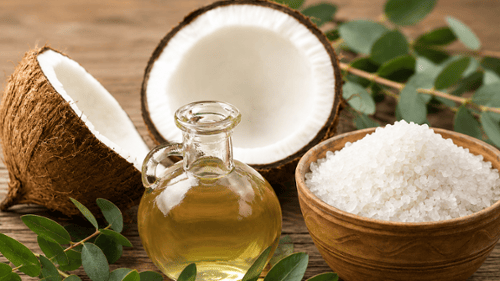
This is just plain salt dissolved in water. Some studies have found that rinsing with saltwater can reduce plaque levels but the efficacy of the rinse was dependent on the concentration and did not look at long term effects.
To date, there are no studies clearly demonstrating effectiveness of salt solutions and which formulations would result in an improvement in gum disease or decay prevention.
However, rinsing with saltwater after a tooth extraction or other oral surgery may help reduce post operative inflammation and assist wound healing.
Coconut oil
Known as ‘oil pulling’ and promulgated in Aryuvedic medicine, this involves rinsing with 1 Tbs of oil for 10 to 20 minutes. The only study, a randomised controlled trial, unfortunately has shown rinsing with coconut oil has no effect on the levels of bacteria in the mouth after 28 days.
Whilst there is no harm is practising ‘oil pulling’, there is however, no additional benefit.
Baking soda
Dissolving half a tsp of baking soda in 250ml of water produces a 1% w/v solution used for rinsing for 1 minute 3-4 times daily. The baking soda solution has an alkaline pH which is thought to neutralise the acidity of the mouth environment, leading to less decay. At this stage, there is not enough evidence to demonstrate that this is the case. Again, there is low risk of harm in using baking soda in a rinse, but demonstrable benefits are uncertain.
For those who consume a high level of acidic foods and drinks or who suffer from medical conditions causing excessive vomiting, using a baking soda rinse after consumption of acidic foodstuffs or after a vomiting episode might help reduce the levels of acid in the mouth and reduce enamel erosion.
Essential oils
These include eucalyptol, menthol, clove oil, thymol, tea tree oil and aloe vera
Essential oils consist mainly of chemicals known as terpenes, terpenoids and phenylpropanoids. In laboratory tests, these have been shown to kill bacteria involved in gum disease or prevent their adhesion to surfaces. However, in practice, effectiveness is limited by delivery method and potential toxicity. Essential oils are not water soluble and a solution containing these oils will not be effectively dispersed in the oral environment. In high concentrations, some oils can be irritating to oral soft tissues. Hence, the formulation of essential oils mouthrinse can determine their efficacy.
To date, there are no clinical trials that have established which formulations, delivery methods and concentrations of essential oils are effective in the oral environment in preventing and treating gum disease.
Probiotics
Probiotic mouthrinses contain living microbes which are beneficial to the oral environment by competing with and suppressing harmful bacteria.
Some studies have shown that probiotic rinses can be effective in reducing severity of gum disease and halitosis (bad breath) in patients. However, in terms of preventing decay, the evidence is weak.
Furthermore, the studies do not investigate if there are long term effects on the overall oral flora and whether beneficial microorganisms are not adversely affected as well.
Conclusion
Compared to the level of evidence about the efficacy of traditional mouthrinses such as chlorhexidine gluconate, the effectiveness of those alternative mouthrinses have not been unequivocally established.
While some of those rinses will not cause harm when used appropriately, others carry risks of toxicity.
Patients are advised to consider whether their mouthrinse of choice is, first of all, effective, but also whether they carry long term risks in terms of toxicity and environmental impacts.
Manufacturing, packaging and transportation of mouthrinse products carry a carbon footprint and mouthrinses are not necessarily beneficial if mechanical toothbrushing and flossing are adequate.
References:
- Mouthwashes: AlternativesandFutureDirections
Brett Duane, Tami Yap, Prasanna Neelakantan, Robert Anthonappa, Raul Bescos, Colman McGrath, Michael McCullough, Zoe Brookes
International Dental Journal. 73: s89 − s97 (2023)
- From Thermal Springs to Saline Solutions: A Scoping Review of Salt-Based Oral Healthcare Interventions
Elisabetta Ferrara, , Manela Scaramuzzino, Biagio Rapone, Giovanna Murmura, and Bruna Sinjari
Dentistry Journal. 14(1): 32 (2026)
- Research progress and antibacterial mechanisms of plant essential oils as alternative therapies for periodontitis
Yan Huang, Xiaoyi Liu, Li Chen, Maolin Li, Ying Xia and Kun Yang
Frontiers in Microbiology. 17:1802802 (2026)

Located in Melbourne Inner North, The Melbourne Smile Clinic is your dentist for Northcote, Thornbury, Fairfield, Westgarth, Clifton Hill, Preston and surrounding suburbs.
For more information or for an appointment, contact us on 9078 4471 or send us a message here